
S3 E6 — The Code Ahead: A Preview to the 2026 FGI Hospital Code
Introduction
Hosts John Williams and Marissa Lamperis Kastrinos sit down with Kirsten Waltz and Ryan Turner, leaders from the 2026 Health Guidelines Revision Committee (HGRC), to preview the physical design updates heading your way and the intent behind them.
Designing the next generation of healing environments is an exciting opportunity, and having the right tools makes all the difference. By understanding the intention behind several of the key changes in the 2026 FGI Code for Planning and Design of Hospitals before the launch, you can stay ahead of industry shifts, make better-informed design decisions, and position your projects for long-term success.




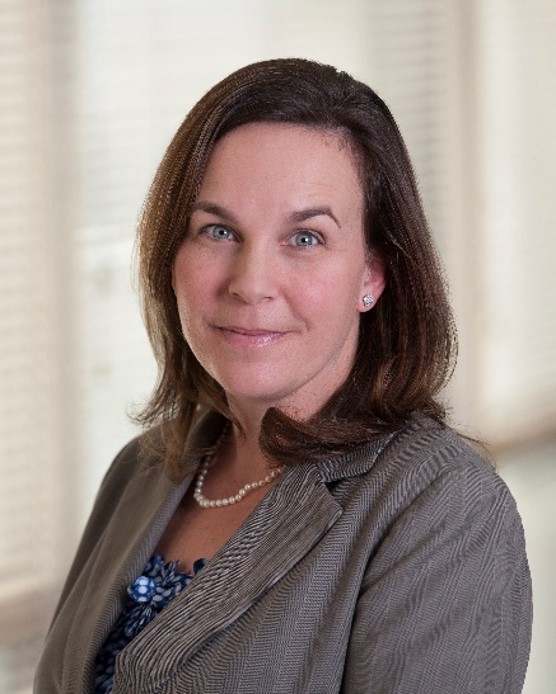
About Kirsten Waltz, MArch, FACHA
Kirsten Waltz is vice president of architecture and planning at Johns Hopkins Health System, where she oversees master planning, programming, and design for the health system and the Johns Hopkins University School of Medicine. With more than 25 years of experience, she has led complex health care projects and previously served as director of facilities planning and design at Baystate Health and managed the London office of Steffian Bradley Architects. Kirsten holds a master’s degree in architecture from Virginia Tech and a bachelor’s degree in interior design from Rochester Institute of Technology. She is actively involved with FGI and the Center for Health Design, and is a past president of the AIA Academy of Architecture for Health. She chaired the Hospital Document Group for the 2026 FGI revision cycle and is a Fellow of the American College of Healthcare Architects.

About Ryan Turner, AIA, ACHA, EDAC
Ryan is a Principal Architect with DSGW, and his 24 years of practice have been focused on helping rural and Indigenous communities. Living and working in northern Minnesota, Ryan has a passion for finding ways to leverage evidenced-based design to find creative solutions that address the unique challenges that small, rural communities face. Ryan has on the Healthcare Guidelines Revisions Committee since 2019, and most currently as a co-chair of the Hospital Document Group and as a member of the Rural Health Topic Group for the 2026 revision cycle. Ryan received his Bachelor of Architecture (B. Arch) from North Dakota State University. Ryan was the chair of the Exam Committee for the American College of Hospital Architects (ACHA) and served on the Planning Committee for the Summer Leadership Summit. Ryan is the current President Elect for ACHA.
Sponsored by:
American Society for Health Care Engineering (ASHE) Optimizing health care facilities [ashe.org]
Want to dive deeper into the 2026 FGI Hospital Code?
Review the major updates of the 2026 FGI Code for Planning and Design of Hospitals with FGI University’s on-demand course, “Significant Changes in the 2026 FGI Code for Planning and Design of Hospitals.” Learn what changed, why it matters, and how to stay ahead.
Earn CEUs Anytime with FGI University and Between the Lines with FGI
Gain even more insight with the extended version of this episode while earning continuing education units (CEUs)! Head over to FGIUniversity.org our educational platform for the FGI Codes/Guidelines, and explore CEU- and HSW-approved audio courses designed to make earning credits effortless—perfect for learning on the go.
To make it even better, use promo code BTL10 at checkout to get 10% off any Between the Lines with FGI course. Listen, learn, and save today.
AIA self-reporting LUs
Facility Guidelines Institute is a registered provider of AIA-approved continuing education under Provider Number 38744124. All registered AIA CES Providers must comply with the AIA Standards for Continuing Education Programs. Any questions or concerns about this provider or this learning program may be sent to AIA CES (cessupport@aia.org).
This learning program may be self-reported for LU credit through the AIA Continuing Education System. As such, it does not include content that may be deemed or construed to be an approval or endorsement by the AIA.
To receive AIA self-reported LUs, learners must complete and self-report two of these entire learning programs for 1 LU.
Don’t forget to share with your friends and colleagues!
Transcript
Sponsorship
[00:00:01] Marissa Lamperis Kastrinos: This episode of Between the Lines with FGI is brought to you by the American Society for Health Care Engineering: Optimizing health care facilities.
Intro
[00:00:14] Marissa: Welcome to Between the Lines with FGI, a podcast brought to you by FGI. In this podcast series, we invite you to listen in on casual conversations related to health and residential care design and construction. Joining us today is FGI’s very own John Williams, vice president of content and outreach, and chair of the 2026 Health Guidelines Revision Committee.
[00:00:40] John Williams: Joining us today is Marissa Lamperis-Kastrinos, FGI’s own Director of Education. And as always, we are curious about how we put healthcare and residential care environments together. Marissa, we’ve got a special episode today. It’s the end of a series, right?
[00:00:57] Marissa: Yeah, it is the end, unfortunately, of season three of Between the Lines with FGI, but also, it’s the end of a mini-series that we added into season. The mini-series focused on key updates to expect in the 2026 FGI Codes for Planning and Design. We first did an episode about residential, then one about outpatient. Today, we are going to embark on the final episode in this mini-series, which dives into the updates for hospitals.
[00:01:28] John: And who better to talk to about that than the leadership of the committee that put the hospital code together? Today we have joining us Kirsten Waltz and Ryan Turner. Kirsten Waltz was the chair of the group that shepherded this document through its creation. Kirsten’s a vice president of architecture and planning for the Johns Hopkins Health Systems and the Johns Hopkins University School of Medicine, and just recently she became a fellow of the American Institute of Architects.
[00:01:57] John: Ryan Turner was a tri-chair of that same committee. Ryan is a principal architect with DSGW. He’s a fantastic architect leader focusing on rural communities, and he’s president-elect of the American College for Healthcare Architects.
[00:02:16] Marissa: Kirsten, Ryan, it is a pleasure to have you here today. Thank you so much for joining us. This is a much-awaited episode. We’ve had so many questions and interest around the hospital document and what’s to come for 2026, so we just can’t thank you enough for joining us today
[00:02:30] Ryan Turner: Thanks for having me.
[00:02:31] Kirsten Waltz: Thanks for having me.
[00:02:32] Marissa: Of course. Let’s start off with the basics. We would love to get to know you a little bit better. Kirsten, tell us a little bit about your experience with FGI, and what got you into the HGRC. Ryan, I’m going to ask you the same thing here in a minute
[00:02:44] Kirsten: Sure. So, with FGI for three cycles, if you can imagine that. So, 2014 is when I started, and I was fortunate enough to work with an amazing group folks to split the outpatient book, from the hospital book, so to create its own standalone document. It was quite the way to start, but it was also transformative for me to have to been given the opportunity to work with so many folks, not only with the outpatient book but with the hospital book during that cycle, to make sure that the standalone document had the content that it needed. In 2018 to 2022, to really refine that document. It was more of a journey of saying, “Yeah, we didn’t get it quite right the first time for… in the cross-references, but here we go.” The excitement for me this cycle was being able to flip over from the outpatient book to the hospital book and really see through it from a lens of the hospital book and dive into more of the correlation between the two books.
[00:04:01] Kirsten: I think you also asked me about what got me into FGI also. Kurt Rockstroh and Rebecca Lewis were two of my mentors that were involved with the AIA Academy for Health and then also pulled me right into FGI saying, “Hey, why aren’t you on this group?”
[00:04:23] John: We all have a Rebecca story, don’t we?
[00:04:25] Kirsten: We do. We do.
[00:04:26] Marissa: Wow. So much experience in, I mean, a very long and short amount of time, depending how you look at it, because in three cycles you’ve just experienced so much evolution with FGI. So, one step further, what inspired you to lead the hospital document group for this cycle?
[00:04:43] Kirsten: Well, I do think that it was a challenge. John, when you called me to say, “Hey, would you, would you do this?”
[00:04:50] John: I begged, and Kirsten was gracious to accept.
[00:04:54] Kirsten: I was basically saying, “Hey, I’m taking a new position with Johns Hopkins.” And it was a great opportunity then to incorporate some of the great things that we’ll talk about that were and were not included in the 2026 revision document, so I was very excited to jump right into it.
[00:05:15] Marissa: So, Ryan, how did you get into the HGRC? What’s your behind-the-scenes story?
[00:05:21] Ryan: Sure. So, this is my second cycle, and I’ve got a Rebecca story to tell also. Rebecca had been coming back to the office and talking about, you know, certain issues or things that were coming up in the meetings, and she liked to bounce things off of me. And she was heavily involved, as you guys know, in the outpatient document. I kind of reached a point where I thought, “Gosh, I wish I could be in the room instead of kind of hearing it through her.” And I thought it would really add value to have a voice for small rural tribal communities in the hospital document as well.
[00:06:00] Ryan: So that kind of piqued my interest and got me inspired, you know, going to bat and advocating for those groups that we already serve, and trying to lend a voice to those particular facilities. So, I was really involved in, as you can imagine, Chapter 2.4 and the Rural Health Topic Group, along with a few other committees.
[00:06:20] Ryan: But in 2026, there was, an opportunity, I’ll say. There was one of the past chairs who had to step away early on in the cycle, and I was asked to kind of pinch hit, so to speak. I was really excited about the opportunity, frankly, just not knowing if it would come along again, so I wanted to take advantage of it.
[00:06:42] John: I begged again, and Ryan graciously accepted.
[00:06:46] Marissa: Smart move, and we’re glad you did. Yeah.
[00:06:48] Kirsten: We are!
[00:06:49] Marissa: Yes. Absolutely. So, Ryan, you talked a little bit about your unique perspective and what you brought to the hospital document. Kirsten, share a little bit more about your unique experience and how that influenced what you all changed or added for the 2026 cycle.
[00:07:03] Kirsten: Sure. So, I think I’ve been on, as part of the owner side of what we call it, for about eight, nine years now, and you do take a perspective on operations a little bit differently than you do in the consulting world. One of the biggest operational items that we were hearing about and starting to implement is what we’ve called discharge lounges or discharge waiting rooms. In FGI, there’s nothing that references it. So, you know, I was picking and pulling from different chapters and getting challenged from my leadership saying, “Well, it’s not, it’s not regulated, so why do I have to follow anything?” So, it was those types of things that I get so excited about being a part of with FGI because I’m experiencing certain wants and needs from clinical staff.
[00:07:52] Kirsten: Ryan’s seeing it, all different parts of the United States were seeing it, and it’s time to say, “Well, is a discharge waiting room a, a code minimum?” And we sit there, and we literally debate for hours over, you know, well, yes—is it a place where somebody is completely discharged?
[00:08:13] Kirsten: Is it a… chair? Is it a stretcher? There were many heated debates; it was very healthy, and I think we had many different models to point to and take a look at the safety aspects of those. Are they rooted in research? And then I think we came up with an incredible new discharge waiting area that folks can really be grounded on from a code minimum standpoint.
[00:08:40] John: So, can you just give us a little bit more about what a discharge lounge is?
[00:08:46] Kirsten: Sure. So, this is for folks that have been discharged. You can have folks sitting in a bed, just waiting to go home, you know, maybe my brother, my sister, my husband, couldn’t get out of work, for a couple hours, or I’m going to have to wait for the pharmacy to give me my meds. All these types of things that were holding up beds for our EVC folks to clean them. As you can imagine, the volumes are building in the emergency department, or they’re coming in from surgery, and they’re waiting for a bed. Within FGI now, we have these discharge lounges regulated, and it’s a great opportunity for them to have a space. Typically, it’s in a recliner chair, you know, something that folks will stay there for a few hours until somebody can pick them up,
[00:09:37] John: Have either of you seen those implemented in hospitals before and seen what the downstream impacts are?
[00:09:44] Kirsten: There’s a pretty significant down streaming in larger hospitals. Up to 1,500 beds. Once you get down to the smaller size hospitals, it’s not as impactful. It all depends on your volumes that are coming through your emergency department and your turnover
[00:10:03] Kirsten: So, it’s not only about space, but the business plan associated with that. Can you support a space dedicated for this? Can you afford the staff? Can you do it with some volunteers? Those are all types of questions that you need to go through with the functional program before you even begin to put pen to paper or start knocking down walls in order to make this type of space happen.
[00:10:26] John: So, much of it is driven by reimbursement. Speaking of reimbursement, it seems like every time we go into a cycle, there is something new out there, there was one this time, Ryan, that you worked a lot on. So, what is a rural emergency hospital?
[00:10:55] Ryan: This is the new CMS thing where you can have a… a new hospital type that is essentially just an emergency room, right? Not 24-hour care. My gosh, I still have the scar tissue from this issue. I’mgoing to call it a new hospital type, but frankly, at the end of our journey, I don’t know that I would necessarily define it as a hospital.
[00:11:09] John: Mm-hmm.
[00:11:09] Ryan: So, it was the Rural Emergency Hospital. It was a new designation recently created by CMS, and really the driving force behind it was try to… to try to stem the closure of rural hospitals across the country.
[00:11:22] Ryan: And I won’t go into the details of that, but I think most folks in our industry are aware of the challenges there. So, the idea being that an existing critical access hospital would re-designate as this rural emergency hospital, and it would change the conditions of participation.
[00:11:43] John: You know, on… on the FGI side because function, at least my sense of the function of a rural emergency hospital, that emergency room, and a critical access emergency room, they didn’t seem to be all that different. Is that what you remember?
[00:12:00] Ryan: Yeah, absolutely. And, the other piece that, I know we wanted to get to the bottom of is that there’s no such thing as a new rural emergency hospital.
[00:12:10] John: Mm-hmm.
[00:12:10] Ryan: It’s going to be starting from scratch, looking to design a rural emergency hospital. Again, you have to be a critical access hospital before you can look at going down this road.
[00:12:21] Ryan: And, in the end of it, what we wanted to learn was, “What does this mean to the physical environment, to the facilities side, what needs to be done?” In the end, knowing that you’re starting out with a critical access hospital already, this new designation wouldn’t necessarily institute requirements that would change the physical plant.
[00:12:42] Ryan: However, the buyer beware side of this, if you choose to go through this, rural emergency hospital designation, there is also the need to be able to come back as a critical access hospital in the future.
[00:13:02] Ryan: However, you would then also need to still meet the requirements of a critical access hospital. So, if your thought is you’re going to change to become an, a rural emergency hospital, and then there are a number of spaces that you no longer require, and you’d be able to change the square footage and footprint of your facility dramatically, potentially, that’s all part of what might attract folks to this. However, in the future, if you were ever to consider going back to be a critical access hospital, you would have to check all the boxes to come back into the fold that way. Hopefully, when folks take a look at the document (and see) that there isn’t an exhaustive amount of text, it’s really just wanting to educate folks about what this means, both now and in the future.
[00:13:48] John: Not only that education, but an acknowledgement that that switch may happen from access to rural emergency and the flip back. If you, if you go from a health care occupancy down to an ambulatory care or a business occupancy in a forty-year-old building, you probably ain’t coming back easily anyway.
[00:14:09] John: Talking about emergency rooms. It’s a small thing, but we now actually have a requirement to have a sign on your building that says emergency. If you have an emergency room, of course, but it gives you the high-level criteria of what that emergency sign looks like. There were a lot of changes in the emergency department section this year, weren’t there?
[00:14:32] Kirsten: Very much so. And, and rightfully so, John, I think it’s amazing how many I’ve been through, say five or, or six emergency department relocations. And the folks that come to that original location years later, right?
[00:14:54] Kirsten: Now, 10 years later, they’re like, “Well, that’s where it used to be the last time I came here. Why isn’t it here?” You know, so making sure not only the campus signs, but that, that you’re able to wayfind it from an exterior standpoint and even an interior standpoint, too.
[00:15:10] Kirsten: I mean, going through this cycle has really made me and my team look at how are we making sure that folks can get through our buildings. I think we take for granted that we know typically how buildings work, you know.
[00:15:25] Kirsten: When you have somebody that’s coming here extremely stressed, they might show up at the wrong location. How do we make sure that there’s an intercom there so that they can get the care that they need? Also, security is an incredible factor in all of our locations and the reduction of entrances at night is a real thing. Ryan, I think you remember all of the heated debate with this, and this was with the outpatient group and the hospital group as a combined effort.
[00:15:58] Ryan: Absolutely. This is going to be one of the strongest memories I have from this cycle is kind of hearing a plea from folks about what’s known as Laura’s Law in the state of Massachusetts, and it’s just a heartbreaking story. I felt like we need to do something here, right?
[00:16:20] John: Yeah. Was somebody that showed up at an emergency department and unfortunately wasn’t able to get in, right?
[00:16:25] Ryan:: Yeah, she was at the wrong door, and, in essence, she wasn’t able to get to the correct door before it was too late.
[00:16:33] Kirsten: And I think she showed up to the door, and it was shut down for that time of night and, unfortunately, there was no intercom. There was nobody guarding the door and she couldn’t physically get to another location, so she passed away right there. In the code today, there would have to be some type of signage if you’re closing down an entrance for a moment in time, and an intercom- something that would communicate that “I’m here, can somebody let me in,” or “Where do I go in order to receive care?”
[00:17:11] Ryan: Hopefully, the new language that we have in the code will make a difference in preventing that kind of tragedy in the future. It’s really going to have designers take a look at the broader picture and wayfinding from off-campus, and bringing people to the right place, in a really clear way. Where do we wanna go next?
[00:17:35] Kirsten: It was a specialty treatment area.
[00:17:38] John: Right.
[00:17:39] Kirsten: This got a lot of passion around this because, you know, folks were saying that it’s in [ASHRAE] 170, and there’s no correlating room type in FGI? You know, this stands out to me because it was something that I was debating. What is it really? And, is it a negative pressure exam room? Does it need a door from the outside? Does it need to have HEPA filtration?
[00:18:09] Kirsten: Does it need to be ducted directly outside? Is it going to be confused with an AII room? There’s many, many different debates, but it’s ultimately ASHRAE 170, they took it out of their updated code. So, I think right now, you know, I’m still very interested to see if there’s code work that we can do on it. But I think that the tried and true, it’s an AII room or it’s not the case from a code standpoint.
[00:18:46] John: And that’s what we definitely heard from the infection preventionists in our group. In the beginning of the cycle, I remember the very first meeting we had, Kirsten, you had a project that you were working on, and you were looking at adding extra negative pressure capacity into that ED, not an AII room, not an airborne isolation room, but something that would maybe get you closer. Do you remember that?
[00:19:14] Kirsten: Yep. And there were exam rooms too. It was all around these exam rooms and 2022 was that pivotal point of folks coming out of COVID, right? And they were really nervous about rooms and, are folks infectious.
[00:19:31] Kirsten: And I was really looking… And this is, this is really the… You ask me, you know, how lucky I am to, to be a part of this group is because you, you get to, geek out, to talk about “Are you seeing this?How are you addressing this?”.
[00:19:45] Kirsten: And they’ll make you think about things that you’ve never thought about, like, “How do folks getting in and out of it? How are folks cleaning it? Does it need a door from the outside? Does it need to have HEPA filtration? Does it need to be ducted directly outside? Is it going to be confused with an AII room?”
[00:20:05] John: I remember all of those specialty rooms that we set up where it was just additional negative pressure capacity inside of an ED. And that made sense to me because we’d been doing that for a couple of years. But I really changed my mind after listening to the infection preventionist, because I think one of the points they made was they don’t necessarily need more negative pressure rooms inside of an ED – they need more AII rooms. The fear of it being confused with an AII room, folks know is negative pressure, the fear is that over time people just kinda forget that it’s not functioning like an airborne isolation room, and you don’t get all of those precautions. So, that, yeah, that really changed my mind.
[00:20:54] Kirsten: I think we should let folks know how much we actually ponder and scrutinize over words. One of my favorite this cycle was the fact of talking with our infection preventionists on surfaces. What’sthe difference between washable and scrubbable, and then how we ended up with a standard phrase of, you know, being able to be cleaned and disinfected. So that was a huge debate.
[00:21:22] John: And a very long one too.
[00:21:24] Kirsten: A very long one.
[00:21:26] Ryan: And I will take some of the blame for that. I had been working through, oh, I forget which chapter, and came back to our committee and said, “Why are we using different phrases to say a similar or the same thing?”
[00:21:39] Ryan: Whether it was durable, scratch-resistant, cleanable, able to be disinfected, those were in the past versions maybe used interchangeably. But the infection prevention folks, they said, “Nope, there are very distinct differences between some of those phrases.”
[00:21:57] Kirsten: It’s been replaced with the standard phrase, “Able to be cleaned and disinfected.”
[00:22:02] Ryan: Exactly. So, it’s gonna be a good thing to have some consistency and have that language be the same throughout so folks have a clear definition of just what the expectations are.
[00:22:14] John: There you go.
[00:22:16] Ryan: I’m just gonna say that seems to rear its head every cycle that at least I’ve been involved in, and even there’s lore of debates in years past about the mobile unit chapter section.
[00:22:32] John: We ended up with a distinctly different approach. I mean, in 2026, you’ll see that if you have a mobile unit that doesn’t really park at a facility that’s just out in the community, we chose not to address those. Ours is primarily used as a licensing document and a design tool. But for those that don’t park at a facility, we didn’t really think there was a facility-related component to it. So I think that took a lot of questions off the table about, “How are we not limiting access for like those blood banks or those community health clinics that may be mobile and provide services where people don’t, have access to them?”
[00:23:23] Ryan: But I mean, there’s no other set of rules out there. It’s like, if we didn’t, you know, who was going to, really do this work? I was actually happy to see that it landed where it did, that, you know, we’re kind of staying within the purview of the, the built environment and what’s connected to it versus kind of trying to oversee all of the mobile units out there.
[00:23:44] Ryan: But, I still think that there’s an opportunity, I’ll say, for that part of our industry. It really should have some guardrails on it.
[00:23:53] John: Yeah, that’s what I heard a lot of different folks. It is an environment where folks receive care, and even though we may not cover it, there’s a need just to get curious about how to do it and, andprovide some guardrails there.
[00:24:11] John: We did something special this cycle. We did a little appendectomy to the FGI Guidelines and created an FGI Code and took all of that appendix language and moved it over to the FGI Handbooks.
[00:24:23] Kirsten: I think, you know, there’s some great inspiration for some other codes and guidelines that are out there, right? NFPA has their handbooks, and ADA has their handbooks. The handbooks are a great opportunity to, I would say, dive further into some of the code language and some of the nuances around it that, John, we’ve probably received many interpretations on, and we knew where some of our, say, hot buttons were to tackle first.
[00:24:58] Kirsten: So, this just really gives an opportunity to, from diagrams to further code language, to help explain things.
[00:25:09] Ryan: I would agree. I also have always appreciated how the appendix language also will speak to best practices and recommendations and a higher standard versus just simply, you know, meeting the code. I think that’s gonna be of value to folks as well, not only further defining or explaining the code side of things, but also talking about, you know, you also want to think about X, Y, and Z.
[00:25:41] John: Any big or little takeaways from the cycle that you really want us to tackle in 2030? What’s gonna be your first proposal for 2030?
[00:25:52] Kirsten: Discharge units.
[00:25:56] John: Let’s have that conversation again.
[00:25:59] Kirsten: Yeah.
[00:26:01] Ryan: As long as it’s if, when, and not shall.
[00:26:03] John: Yeah.
[00:26:04] Ryan: Then I’ll be fine with it.
[00:26:07] John: Well, thank you both so much for being here today. Thank you for all of your time and all of your service to the community these past four years serving in the roles that you did. And I’m just so excited to you again next time.
[00:26:22] Kirsten: Thanks for having me.
[00:26:24] Ryan: Yeah. Thank you very much for having me.
[00:26:27] John: Thank you, Kirsten and Ryan, for this in-depth look at the changes ahead, . And as always, thank you to the listeners for joining us on this episode of Between the Lines with FGI.
[00:26:35] Marissa: Now, if you’re looking for more on the 2026 FGI Hospital Code, you are in luck! We have an on-demand course at fgiuniversity.org that really dives into the changes that you can expect and the why behind it. If you use the promo code BTL10 at checkout, you will receive 10% off your entire FGI University purchase, which even works on the annual all-access pass.
[00:27:01] John: Now that is a deal!
[00:27:02] Marissa: Indeed. If you’re interested in sharing your content ideas or even sponsoring Between the Lines with FGI, we would love to hear from you. You can always email us directly at podcast@fgiguideslines.org. Thanks for joining us today.
[00:27:17] John: See you soon. In fact, if you’ll be at ASHE’s Healthcare Facilities Innovation Conference, keep an eye out for us. Please say hi and tell us what you think about the season.
[00:27:27] John: All right. Season three is in the books, Marissa!
[00:27:30] Marissa: I cannot believe it! My very first season – done and dusted. What a blast. John, I love doing this with you, and I can’t believe it went by so fast. Until next time!
[Intro music: “Skip to My Lou” by Neal Caine Trio]

Special thanks to Neal Caine and the Neal Caine Trio for the use of his song “Skip To My Lou” by the album of the same name
Find the album on Spotify or Apple Music.
Visit Neal Caine’s website here.